Keynote Speeches
Professor Junzo Watada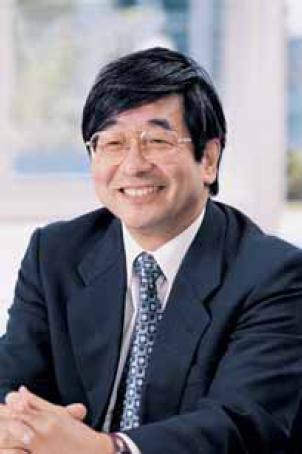 |
|
| Topic: | DNA Computing and its Application |
| Abstract: | The objectives of this chapter are twofold: firstly to introduce DNA computation,
and secondly to demonstrate how DNA computing can be applied to
solve large, complex combinatorial problems, such as the optimal scheduling
of a group of elevators servicing a number of floors in a multi-storey building.
Recently, molecular (or wet) computing has been widely researched not only
within the context of solving NP-complete/NP-hard problems that are the
most difficult problems in NP, but also implementation by way of digital
(silicon-based) computers [21]. We commence with a description of the basic
concepts of "wet computation" , then present recent results for the efficient
management of a group of elevators. |
| Biography: | I Education
Dr. Junzo Watada was born at Osaka in 1945. He received his B.S. and M.S. degrees in electrical
engineering from Osaka City University, Japan, and Dr. of Eng. degree by the research on fuzzy
multivariate analysis from Osaka Prefecture University, Osaka, Japan. |
Professor Shyi-Ming Chen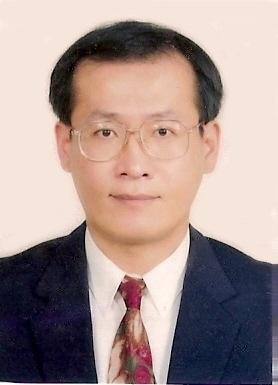 |
|
| Topic: | Handling Forecasting Problems Based on Fuzzy Time Series and Genetic Algorithms |
| Abstract: | Forecasting activities play an important role in our daily life. We usually forecast many things concerned with our daily life, such as weather, economy, stock market, population growth, ¡K, etc. Based on these forecasting techniques, we can prevent damages to occur or get benefits from the forecasting results. A drawback of traditional forecasting methods is that they can not deal with forecasting problems in which the historical data are represented by linguistic values. In recent years, some researchers used fuzzy time series to handle forecasting problems. In this talk, we present some methods to handle forecasting problems based on fuzzy time series and genetic algorithms. The proposed methods get higher average forecasting accuracy rates than the existing methods. |
| Biography: | I Education Dr. Shyi-Ming Chen was born on Taipei, Taiwan, in 1960. He received his Ph.D. degree in Electrical Engineering from National Taiwan University, Taipei, Taiwan, in June 1991. |
Professor Vaclav Snasel |
|
| Topic: | Binary Data Mining |
| Abstract: | Binary data have been occupying a special place in the domain of data analysis. Analysis of binary data sets, however, generally leads to NP-complete/hard problems. Consequently, the focus here is on effective heuristics for reducing the problem size. Matrix factorization or genetic algorithms is an important task helpful in the analysis of high dimensional real world data. There are several well known methods and algorithms for factorization of real data but many application areas including information retrieval, social networks, formal concept analysis, pattern recognition and data mining require processing of binary rather than real data. Unfortunately, the methods used for real matrix factorization fail in the latter case. In this talk we introduce background for binary matrix factorization. |
| Biography: | Dr. Vaclav Snasel was born on Tabor, Czech Republic, in 1957. He received his Ph.D. degree in Algebra and Geometry the Masaryk University Brno in 1991. |
Vice President Alex Huang |
|
| Topic: | Evolving IPTV Services and Applications |
| Abstract: | The introduction of IPTV would firstly give a quick overview of global market development of IPTV, which is derived from the trend of digital convergence. Secondly, it provides a reference case review of Chunghwa Telecom's MOD services in Taiwan. Following the overview and reference, a live demo of innovative applications is included to provide audiences first-hand and direct experiences of next generation TV services. IPTV is a hot topic for telecom operators, content providers and major IT/ Telecom equipment vendors such as Cisco, Microsoft, Sony, Intel, Ericsson and Alcatel- Lucent...etc. From a snapshot of IPTV market and service, it delivers a general picture of what IPTV was, is and will be. |
| Biography: | <Alex Huang is the Vice President of the Multimedia Integration Division of HwaCom Systems Inc., who is also the spokesperson of HwaCom Systems. Inc.. |