Keynote Speeches
Professor Ton Kalker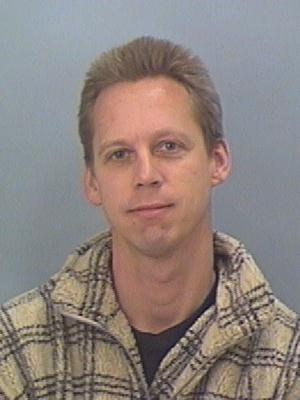 |
|
IEEE Fellow |
|
| Topic: | The State of Reversible Watermarking |
| Abstract: | Watermarking is usually associated with copyright protection of multimedia content. Accordingly, the field of watermarking is often sub-categorized in robust watermarking (embedding a robust copyright flag), fragile watermarking (detection of tampering)and semi-fragile watermarking (detection of malicious tampering). In this talk we will discuss a fourth subcategory of watermarking that is often referred to as reversible watermarking. Very loosely speaking, a reversible watermark is an auxiliary signal embedded in a host signal that can be completely removed from the watermarked content, allowing complete restoration of the original host signal. |
| Biography: | Prof. Dr. Ton Kalker has made significant and widely recognized contributions to the field of media security, in particular digital watermarking, robust media identification and interoperability of Digital Rights Managements systems. His history in this field of research started in 1996, submitting and participating in the standardization of video watermarking for DVD copy protection. His solution was accepted as the core technology for the proposed DVD copy protection standard and earned him the title of Fellow of the IEEE (2001). His subsequent research focused on robust media identification, where he laid the foundation of the Content Identification business unit of Philips Electronics, successful in commercializing watermarking and other identification technologies. |
Professor Ming-Ting Sun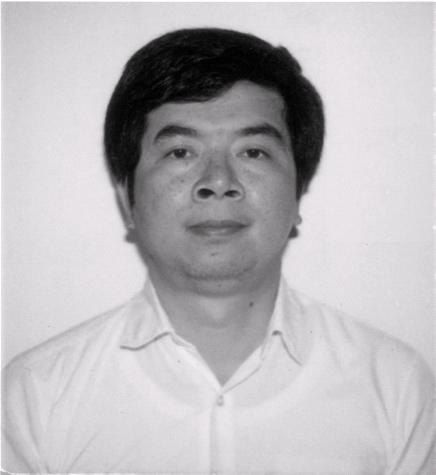 |
|
IEEE Fellow, 1996 |
|
| Topic: | Multimodality Signal Fusion and Applications |
| Abstract: | We deal with multimodal signals (e.g., visual, audio, text, and signals from various sensors) in our daily life. In many applications such as automatic event detection or user modeling, using multimodal signals can provide more information than single modal signal. The correlations and complementary nature among the multimodal signals could be explored to produce much better results than that could be obtained by systems using single modal signal. For example, for surveillance applications, compared to using video signal, audio signal has the advantages of not being limited by the ambient lighting, having relatively large coverage without the line-of-sight limitation, and reduced computation over video. Also, some events are characterized by the features in the audio signal, not in the video signal. By combining information from both video and audio, better event detection results could be achieved than by using the video or the audio signal alone. In this talk, we show some examples of our research work and applications by fusing information from multimodal signals, and discuss related issues and challenges. |
| Biography: | Ming-Ting Sun
(S'79-M'81-SM'89-F'96) received the B.S. degree from National Taiwan
University in 1976, the M.S. degree from University of Texas at Arlington in
1981, and the Ph.D. degree from University of California, Los Angeles in
1985, all in electrical engineering. |
Professor Tie-Niu Tan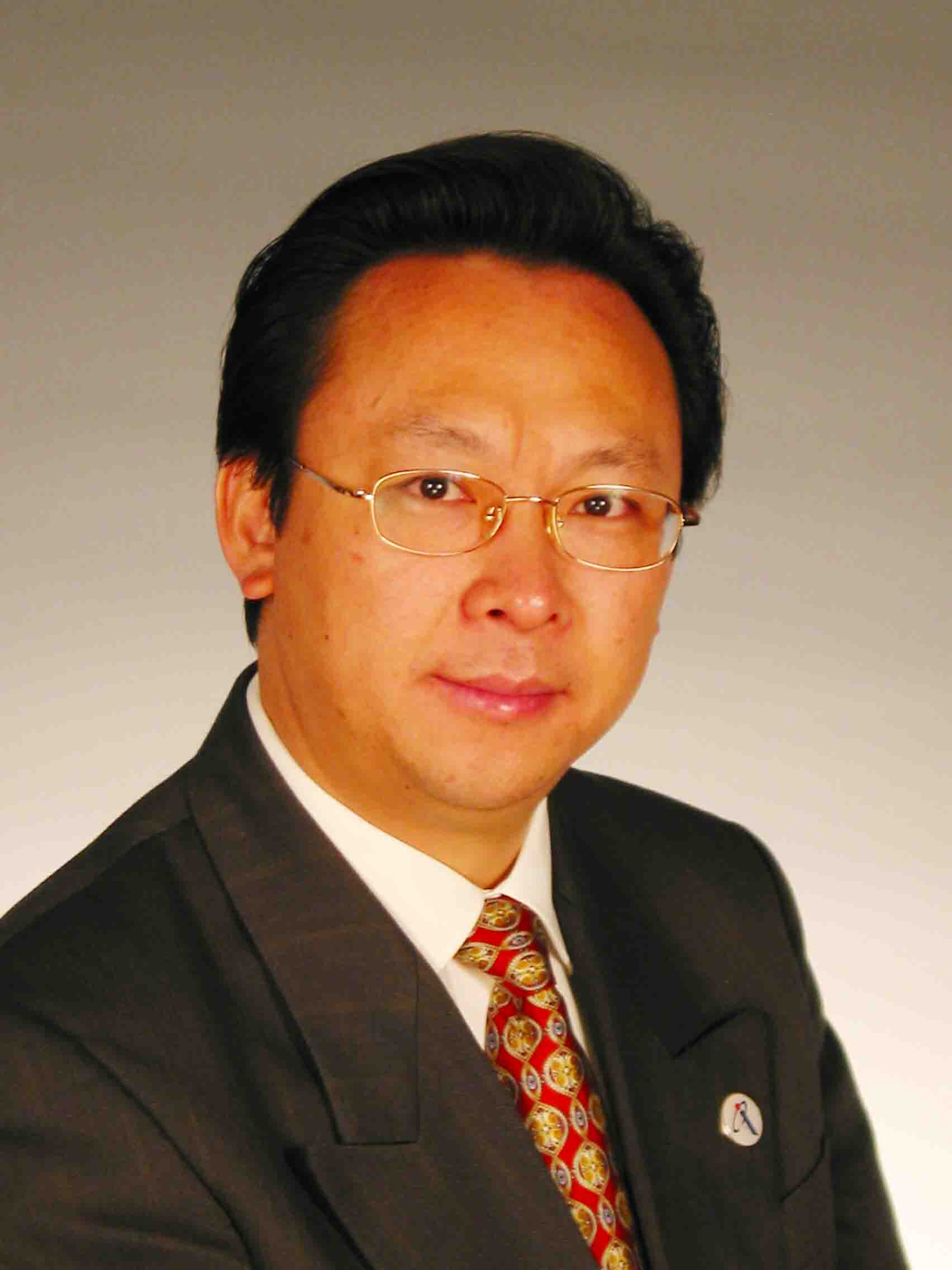 |
|
| Abstract: | He received his B.Sc. degree in electronic engineering from Xi'an Jiaotong University, China, in 1984, and his M.Sc. and Ph.D. degrees in electronic engineering from Imperial College of Science, Technology and Medicine, London, U.K., in 1986 and 1989, respectively. In October 1989, he joined the Computational Vision Group at the Department of Computer Science, The University of Reading, Reading, U.K., where he worked as a Research Fellow, Senior Research Fellow and Lecturer. In January 1998, he returned to China to join the National Laboratory of Pattern Recognition (NLPR), Institute of Automation of the Chinese Academy of Sciences (CAS), Beijing, China, where he is currently Professor and Director of the NLPR, and the Director of the Institute. He is also Head of the Department of Automation, The University of Science and Technology of China (USTC). He has published more than 250 research papers in refereed journals and conferences in the areas of image processing, computer vision and pattern recognition. His current research interests include biometrics, image and video understanding, digital watermarking and information hiding. Dr Tan is a Fellow of the IEEE and the IAPR (the International Association of Pattern Recognition). He has served as chair or program committee member for many major national and international conferences. He is or has served as Associate Editor or member of editorial boards of many leading international journals including IEEE Transactions on Pattern Analysis and Machine Intelligence (PAMI), IEEE Transactions on Automation Science and Engineering, IEEE Transactions on Information Forensics and Security, IEEE Transactions on Circuits and Systems for Video Technology, Pattern Recognition, Pattern Recognition Letters, Image and Vision Computing, etc. He is Editor-in-Chief of the International Journal of Automation and Computing, and Acta Automatica Sinica. He is Chair of the IAPR Technical Committee on Biometrics, the founding chair of the IAPR/IEEE International Conference on Biometrics, and Chair of the IEEE Beijing Section as well as member of the Executive Committee of the IEEE Region 10 (the Asia-Pacific Region). He currently serves as the Acting President of the Chinese Society of Image and Graphics, and Deputy President of the China Computer Federation and the Chinese Automation Association. He has given invited talks and keynotes at many universities and international conferences. |